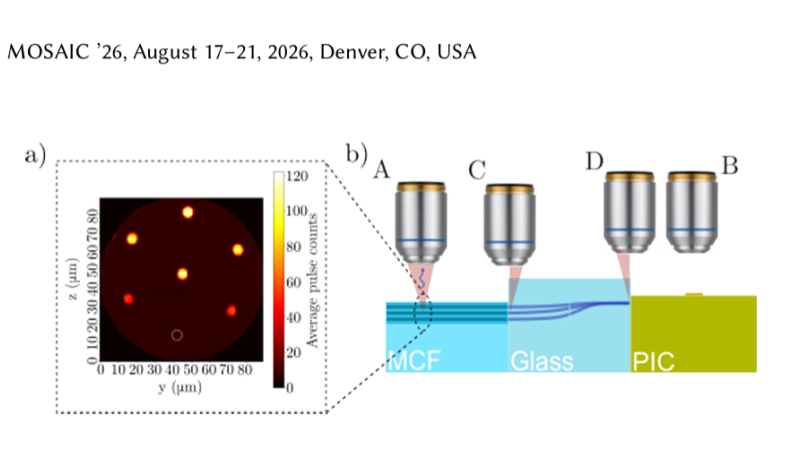


Opsydia provides commercial systems based on adaptive optics which can directly write surface or subsurface structures in a variety of transparent materials. Commercial applications to date include waveguide writing for optical connectivity, subsurface marking of diamonds for authenticity and provenance purposes and other applications.
The adaptive optics approach provides unique advantages for writing at depth in materials as optical aberrations (or distortions to the beam shape) induced at both the surface and within the bulk can be corrected dynamically. This allows for great freedom in the design of such structures and provides opportunities for next generation optical and electrical connectivity in semiconductor devices.
As laser beams move through any material, especially glass and crystals such as found in laser optics, microscope objectives, etc., the beams are distorted such that their wavefront “shape” is changed (aberrated) resulting in a distorted focus. By using an adaptive optic element, such as a spatial light modulator (SLM), the wavefront “shape” can be changed, or pre-aberrated, such that when the beam passes through the material of the lens and the target samples, the aberrations imposed by the adaptive device are optimally offset by those encountered in the material (lens and target material).
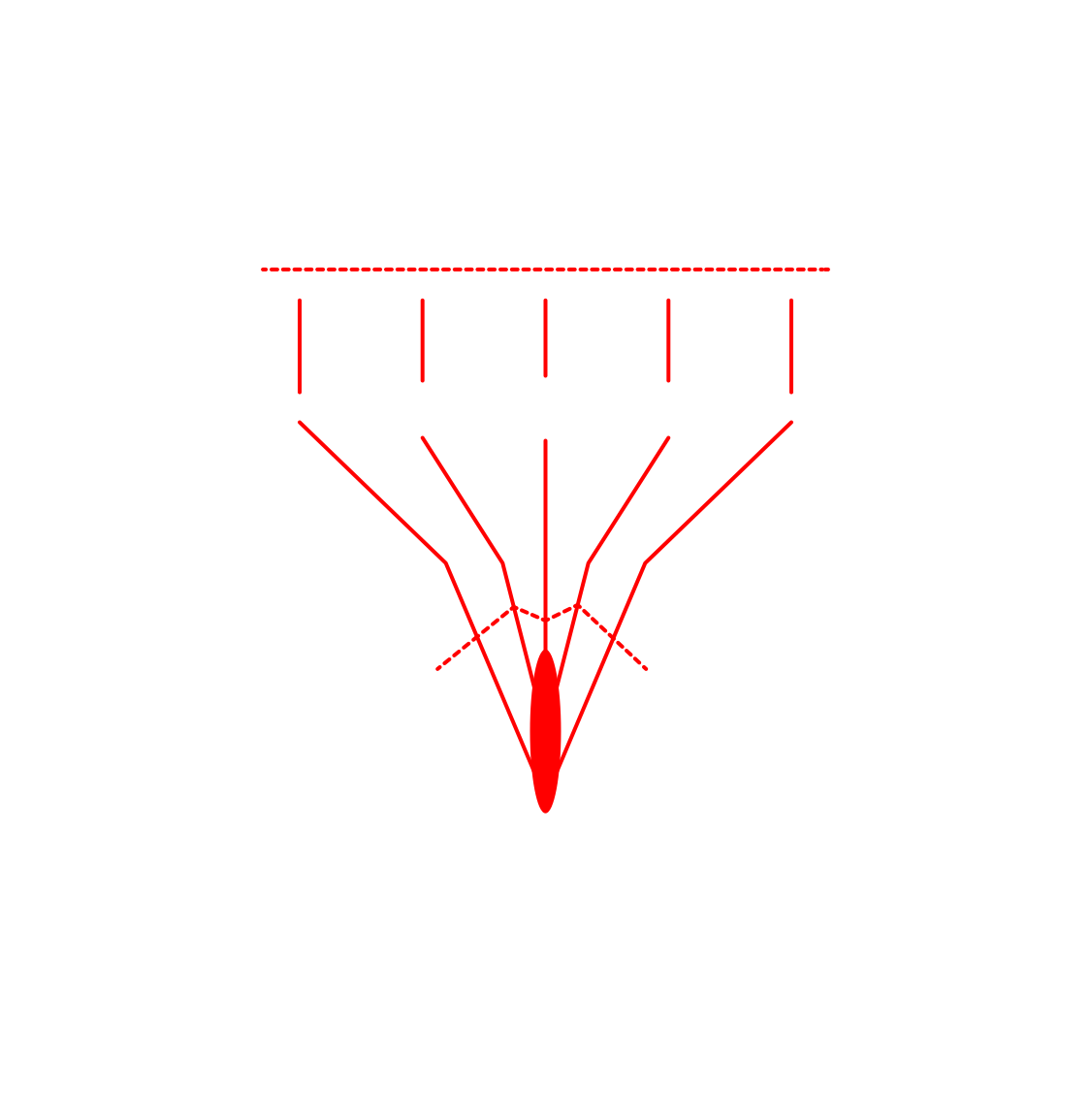
The flat wavefront encounters aberrations due to the lens and the target materials which results in an aberrated wavefront and a distorted focus.
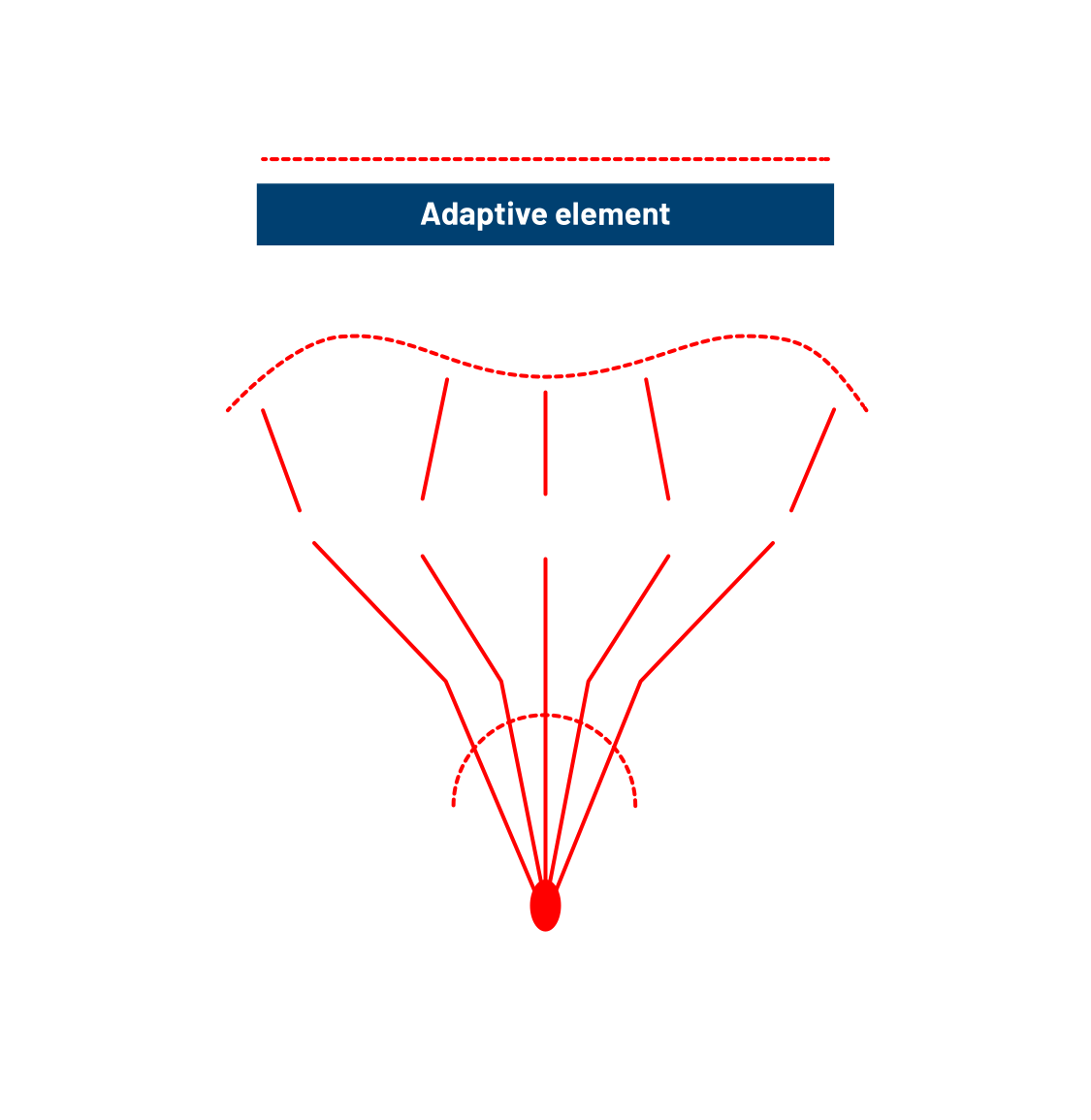
Using adaptive optics to pre-aberrate the wavefront before it encounters the material, we are able to offset the aberrations introduced by the material (lens & target material); thereby pre-compensating for these effects resulting in corrected focus.

Glass connectors are the future for many applications including datacoms and next generation computing.
Density matters as real estate is scarce. Closer packing and 3D structures (“Ocean Depth”) approaches are going to win out.
Opsydia is agnostic to architecture such as Linear Pluggable Optics, Co-Packaged Optics and has a role to play in each.
Adaptive optics from Oxford University allows us to write to the edge and at depth.
In-situ waveguide writing overcomes the alignment problem.
Applications exist in semiconductors and beyond.