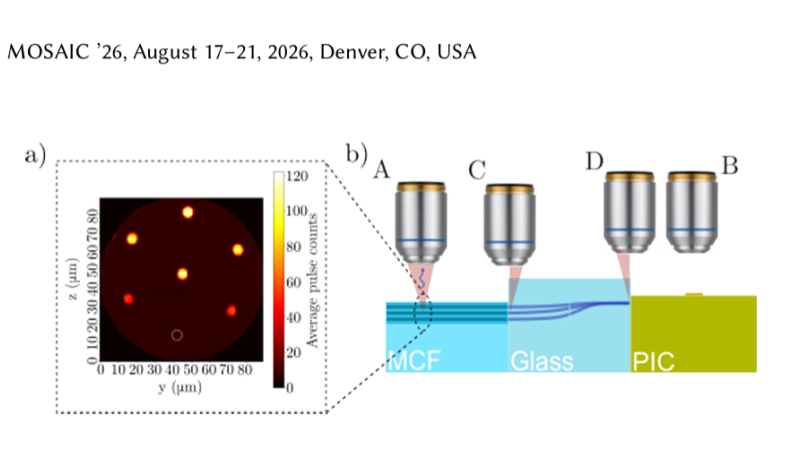


One of the greatest challenges in modern computing is limitations of space. This “real estate” problem arises for the difficulty in getting sufficient connectivity around a chip to allow it to communicate at the maximum possible speed.
One solution to this proposed by Intel and others is to use substrates made of glass. This is especially interesting as most computers today house many chips on the same substrate. By choosing glass as the substrate material, it is possible to seamlessly interface optical interconnects via waveguides. While glass can function very well as an optical material with high quality waveguides, it also has the advantage of being thermally inert and more rigid than classic organic substrates.